
BREAST DIAGNOSTICS
- MAMMOGRAPHY
- MAMMA SONOGRAPHY
BREAST DIAGNOSTICS
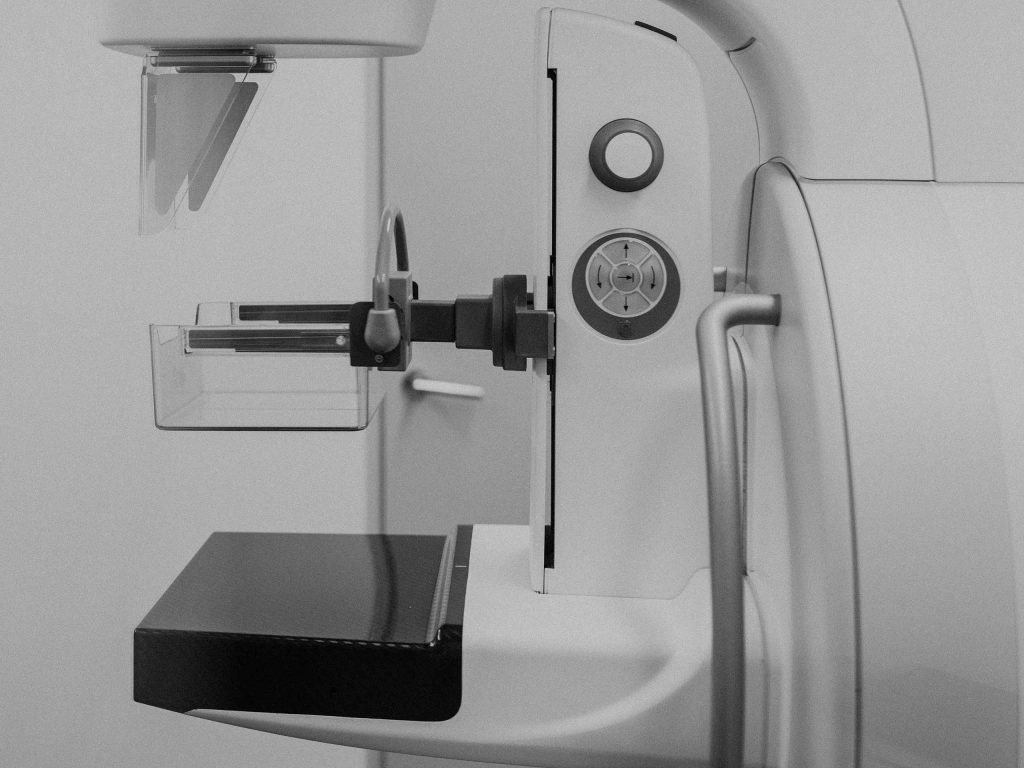
Breast diagnostics encompasses the two most important screening methods used in the early detection of breast cancer: mammography (breast X-ray) and mamma sonography (breast ultrasound). Radiation exposure is relatively low in the case of mammography and zero with mamma sonography, and both methods are non-invasive. Currently, there is no better method for the early detection of breast cancer than mammography in combination with mamma sonography.
- MAMMOGRAPHYMammography is capable of detecting breast cancer in its earliest stages, often before a tumour becomes palpable or causes any symptoms. Early detection significantly increases the chances of successful treatment. Mammography can also detect other, benign changes in the breast, such as cysts or calcification, which should be treated or monitored further. For many women, mammography can provide a sense of reassurance, as they can be confident that no signs of breast cancer are present.
- MAMMA SONOGRAPHYMamma sonography is a supplementary diagnostic tool that can be used alongside mammography. It can detect changes in the breast, such as nodules or cysts, and is recommended for women with dense breast tissue.
GOOD TO KNOW
- AT WHAT AGE SHOULD I HAVE A MAMMOGRAPHY EXAMINATION?In the absence of symptoms, regular check-ups are recommended for women between the ages of 45 to 75 years. When you turn 45, your eCard will automatically be activated for biennial check-ups (or annual check-ups for patients with a relevant family history). You will receive a letter from your insurance provider, inviting you to attend a mammography. You can arrange for such check-ups to be carried out in our practice.
- IS MAMMOGRAPHY PAINFUL?In order to obtain clear images, during a mammography examination the breast is compressed between two plates. Some women, especially those with sensitive breasts, experience this pressure as uncomfortable or painful. Our medical team will do all they can to make you as comfortable as possible. Good planning can also help to reduce discomfort: breasts are generally the least sensitive around ten days after menstruation.
- HOW MUCH RADIATION WILL I BE EXPOSED TO?
Our equipment is designed to deliver the lowest possible radiation dose. A standard examination of both breasts (two images per breast) results in a dose of 0.4 millisievert, which is equivalent to the radiation dose received through natural background radiation over the course of one or two months. - WHY DO I HAVE TO WAIT FOR THE RESULTS?
By default, diagnosis is carried out according to the “four-eyes principle” (dual diagnosis), whereby two specialist doctors independently view the mammography images according to predefined criteria. As this diagnostic method is time-intensive, your diagnosis will only be available a few days after your examination. - WHAT HAPPENS WHEN SOMETHING IS FOUND DURING THE MAMMOGRAPHY EXAMINATION?
While an abnormal mammography diagnosis can be very disconcerting, most abnormalities are not a sign of breast cancer but simply indicate some benign change in the breast. If your mammogram does indeed show an abnormality, we will arrange for further examinations to be carried out in order to make a definitive diagnosis.
You can find further information at www.frueh-erkennen.at/sprachen/en